Why Ceramides Matter More in Fall: The Science Behind a Healthy Skin Barrier
What are ceramides, and why use them if our skin already produces them?
As fall arrives, many people notice that their skin feels drier, tighter, or rougher. Changes in temperature, humidity, and indoor heating can affect the skin environment.
This is one reason ceramides often receive more attention during the colder months.
But if our skin naturally produces ceramides, why use them in skincare?
To answer that, let’s look at what ceramides are, where they are found, and what topical ceramides can actually do.
1. What Are Ceramides?
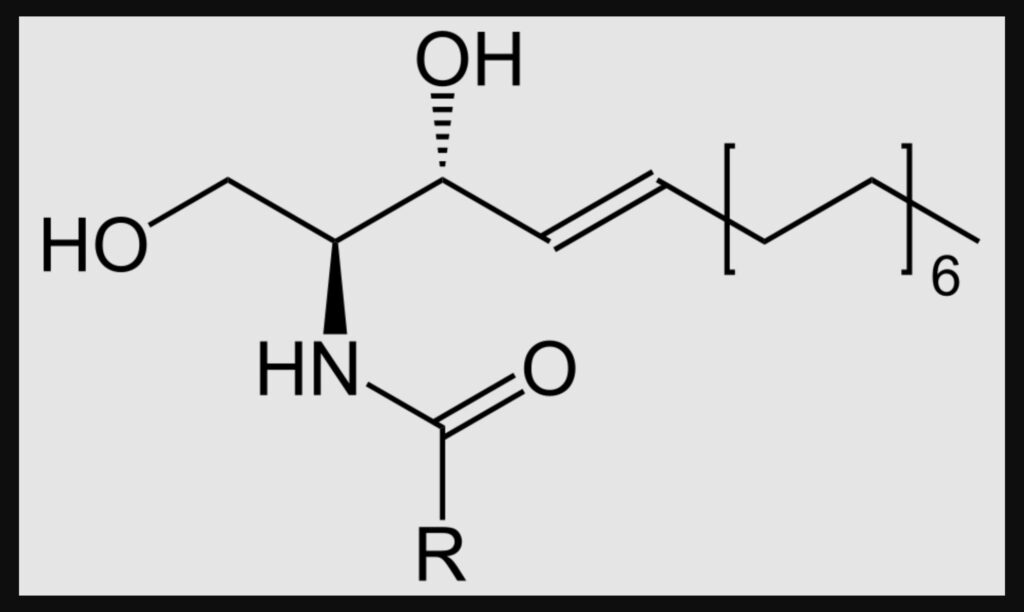
Ceramides are a family of lipids, not a single ingredient.
They are made from a sphingoid base and a fatty acid, and the skin contains many different types.
Common ceramides found in cosmetic ingredient lists include:
- Ceramide NP
- Ceramide AP
- Ceramide EOP
- Ceramide NS
- Ceramide EOS
Different ceramides have different structures and properties, so “ceramide” does not mean that all ceramides are identical.
2. Where Are Ceramides Found in the Skin?
Ceramides are especially important in the stratum corneum, the outermost layer of the skin.
This layer contains corneocytes surrounded by organized lipids, mainly:
- Ceramides
- Cholesterol
- Free fatty acids
Together, these lipids contribute to the skin’s barrier function by helping regulate what passes through the outermost layer of the skin.
A simple analogy is to think of corneocytes as bricks and the surrounding lipids as mortar. The actual skin structure is much more complex, but this analogy helps explain the basic concept.
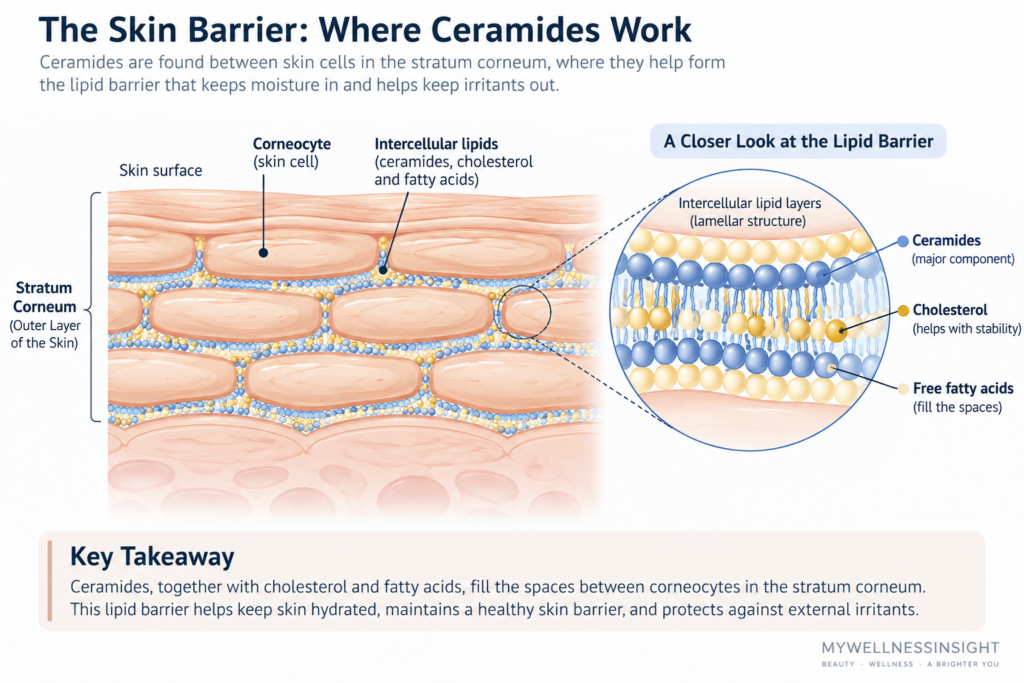
Illustration of the stratum corneum and its intercellular lipid barrier.
3. Does Our Skin Make Ceramides?
Yes.
Keratinocytes can produce ceramides through several biochemical pathways, including de novo synthesis, sphingomyelin hydrolysis, and salvage pathways.
So our skin is capable of producing its own ceramides.
However, ceramide levels and composition can change with factors such as age, environmental conditions, and certain skin conditions.
This is where topical ceramides may become relevant.
4. Why Use Ceramide Skincare?
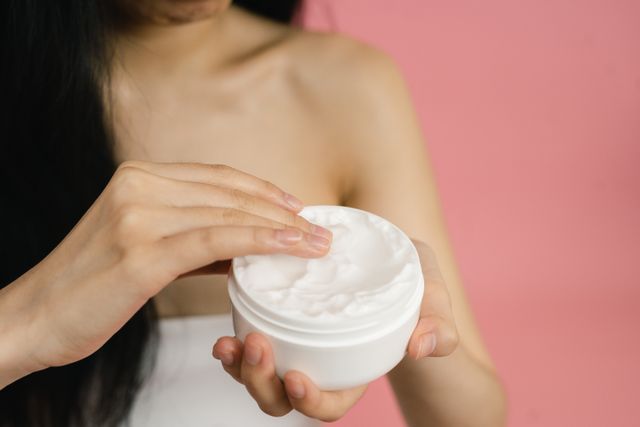
Topical ceramides should not be thought of as simply replacing the ceramides naturally produced by the skin.
Instead, they can be understood as one way of:
Supporting the lipid environment of the skin barrier from the outside.
Ceramide-containing moisturizers have been studied for effects on skin hydration and TEWL (transepidermal water loss).
TEWL refers to water passing through the skin and evaporating from the skin surface. It is commonly used as one indicator of skin barrier function.
However, TEWL measurements can also be affected by temperature, humidity, anatomical site, and measurement conditions. Therefore, it should not be considered the only measure of skin barrier health.
Some clinical studies have reported improvements in hydration and changes in barrier-related measurements with ceramide-containing moisturizers.
Importantly, this does not mean that every ceramide product will produce the same results. Formulation, ceramide type, other ingredients, and usage conditions all matter.
5. Where Do Cosmetic Ceramides Come From?
Ceramide ingredients can be produced through different methods, including:
- Synthetic production
- Plant-derived sources
- Biotechnology- or enzyme-based methods
Is synthetic ceramide bad?
No.
Synthetic simply means that the ingredient is manufactured through a production process. This can allow manufacturers to produce specific structures with consistent quality and purity.
Likewise, plant-derived does not automatically mean better.
The source of a ceramide is only one part of the overall picture. The ceramide type, formulation, ingredient combination, and supporting evidence are also important.
6. Where Does Topically Applied Ceramide Go?
Applying ceramide to the skin does not necessarily mean that it penetrates deeply.
An ex vivo human skin study found that topically applied ceramides were primarily associated with the skin surface and microrelief areas, with limited penetration into deeper parts of the stratum corneum.
So it is more accurate to say:
Topically applied ceramides are primarily associated with the outermost layer of the skin, particularly the stratum corneum.
It is too simplistic to say that applied ceramides simply become the skin’s own ceramides.
7. Why Do Ceramides Get More Attention in Fall and Winter?

During fall and winter, cooler temperatures, changes in humidity, and indoor heating can alter the skin environment and make dryness more noticeable.
These conditions can make hydration and skin-barrier care more noticeable concerns.
Research has also reported seasonal differences in skin hydration and lipid composition. However, findings on seasonal changes in TEWL are not consistent across all studies.
So rather than saying:
“Everyone needs ceramides in winter,”
it is more accurate to say that ceramides receive more attention during colder, drier seasons because maintaining hydration and supporting the skin barrier become more relevant.
8. What Should You Look For in a Ceramide Product?
Don’t automatically trust the “3:1:1 Golden Ratio”
You may have seen:
Ceramides : Cholesterol : Fatty acids = 3:1:1
described as a “golden ratio.”
The original research is more complicated than this simple formula. Studies examined different combinations and ratios of skin lipids, including equimolar mixtures and other formulations.
Therefore, 3:1:1 should not be treated as a universal formula for every ceramide product.
The broader lesson is more important: the combination and formulation of skin-barrier lipids can matter.
What can consumers actually check?
Look for:
- The specific ceramide type
- Other barrier-related ingredients
- Information provided by the manufacturer
- Evidence supporting the product’s claims
A standard ingredient list generally cannot tell you the exact concentration or formulation ratio of each ingredient.
9. How to Read the Ingredient List
INCI (International Nomenclature of Cosmetic Ingredients) is the standardized naming system used for cosmetic ingredients.
Instead of relying only on phrases such as:
“Ceramide Complex”
“Barrier Technology”
“Ceramide Care”
look at the actual Ingredients list.
You may see specific names such as:
- Ceramide NP
- Ceramide AP
- Ceramide EOP
This is one of the simplest ways to determine which ceramide is actually listed in a product.
10. What Does “Clinically Tested” Actually Mean?
This is an important distinction.
Research may study:
The ceramide ingredient
Researchers may investigate how ceramides contribute to skin-barrier structure and function.
A finished skincare product
Researchers may have people use a specific product and then measure outcomes such as hydration or TEWL.
These are different types of evidence.
Research on a ceramide ingredient does not automatically prove that every product containing ceramides will produce the same results.
When reading a skincare claim, it is therefore useful to ask:
What exactly was studied?
Was it the ingredient itself, or the finished product?
11. Does More Ceramide Mean Better?
Not necessarily.
The type and structure of the ceramide, its combination with other lipids, and the overall formulation can all influence the product.
Therefore:
A product with a higher percentage of ceramide is not automatically better.
There is also no single number of days that applies to every ceramide product. Studies have examined both single applications and repeated use over periods such as 7 or 28 days.
Consistent use according to the product’s directions is more meaningful than focusing on one universal timeframe.
12. Natural, Plant-Derived, or Synthetic?
A common assumption is:
Natural = better
Synthetic = worse
But cosmetic science is more complicated than that.
Natural or plant-derived does not automatically mean superior, and synthetic does not automatically mean inferior.
Instead, consider:
- Which ceramide is used?
- What else is in the formulation?
- How is the product formulated?
- What evidence supports its claims?
The origin of an ingredient is only one part of evaluating a cosmetic product.
13. A Real Ingredient List Example
Let’s use KOS-MARA Herbal Calming Moisturizer as a simple example.
Its ingredient list includes Ceramide NP.
The point of this example is not to claim that the product is better or more effective.
It simply demonstrates how to read a skincare product.
Instead of asking only:
“Does this product say it contains ceramides?”
you can ask:
“Which ceramide is actually listed in the Ingredients?”
This approach can also be applied to other skincare products.
14. Are Ceramides Safe to Use?
Ceramides are widely used in cosmetics and have been evaluated for cosmetic safety.
However, a ceramide product also contains many other ingredients, and individual reactions can vary.
If you have sensitive skin, consider testing a new product on a small area first.
If persistent irritation, significant redness, swelling, or itching occurs, discontinue use and seek professional advice when appropriate.
Cosmetic products should also not be considered substitutes for medicines used to treat skin diseases.
15. How Are Ceramides Regulated?
The presence of ceramides does not mean that a cosmetic product receives a separate “ceramide approval.”
In Canada, cosmetics are subject to the Food and Drugs Act and Cosmetic Regulations, and manufacturers and importers must comply with applicable requirements.
Cosmetics sold in Canada must also be notified to Health Canada through the Cosmetic Notification Form (CNF).
However, CNF submission is not the same as pre-approval of a product’s effectiveness or quality.
In the United States, the FDA regulates cosmetics, and the Modernization of Cosmetics Regulation Act (MoCRA) has strengthened the regulatory framework for cosmetic safety and manufacturer responsibilities.
So a claim such as “FDA Approved Ceramide” should not automatically be interpreted as FDA approval of a cosmetic product’s effectiveness.
A Simple Ceramide Checklist
Before buying a ceramide product, ask:
1. Did I check the Ingredients list?
Don’t rely only on the front label.
2. Which ceramide is listed?
For example, Ceramide NP, AP, or EOP.
3. What else is in the formula?
Ceramides work within a larger formulation.
4. Am I relying too much on marketing claims?
“Natural,” “plant-derived,” “high ceramide,” and “3:1:1” do not tell the whole story.
5. What exactly was studied?
Was the research about the ceramide ingredient or the specific finished product?
Common Misconceptions About Ceramides
| Common misconception | What the evidence suggests |
|---|---|
| “My skin makes ceramides, so I don’t need them in skincare.” | Topical ceramides have been studied as a way of supporting the skin-barrier lipid environment. |
| “More ceramide is always better.” | Ceramide type, lipid combinations, and formulation also matter. |
| “3:1:1 is the universal golden ratio.” | Research has examined multiple lipid combinations and ratios. |
| “Plant-derived ceramides are better.” | Ingredient origin alone does not establish superiority. |
| “Synthetic ceramides are bad.” | Being synthetic does not by itself determine quality or safety. |
| “Applied ceramides penetrate deeply and become the skin’s own ceramides.” | Their distribution is more complex and is primarily associated with the outer skin layers. |
| “Any product containing ceramides is clinically proven.” | Ingredient research and finished-product clinical research are different types of evidence. |
Final Takeaway
Ceramides are important lipids naturally found in the skin, especially in the stratum corneum, where they contribute to the skin’s barrier structure.
Using ceramide skincare is not contradictory to the fact that our skin produces ceramides.
Rather, topical ceramides can be viewed as one way of supporting the skin barrier from the outside.
When choosing a ceramide product, don’t focus only on how much ceramide it claims to contain.
Instead, consider:
- Which ceramide is used?
- What other ingredients are included?
- How is the product formulated?
- What research supports the claim?
And one of the easiest steps is simply to look at the Ingredients list and identify the actual INCI name, such as Ceramide NP, Ceramide AP, or Ceramide EOP.
Understanding the ingredient list can help you look beyond marketing language and make more informed skincare choices.
Frequently Asked Questions
If my skin already produces ceramides, do I need a ceramide product?
Not necessarily. However, ceramide-containing moisturizers have been studied for effects on hydration and skin-barrier-related measurements.
Are Ceramide NP and Ceramide AP the same?
No. They are different members of the ceramide family with different structural characteristics.
Is more ceramide always better?
No. Ceramide type, structure, lipid combinations, and the overall formulation also matter.
Are plant-derived ceramides better?
Not necessarily. The source of an ingredient alone does not establish that it is superior.
What is a synthetic ceramide?
A synthetic ceramide is a ceramide manufactured through a production process. Synthetic does not automatically mean lower quality or unsafe.
Can I tell whether a product uses the 3:1:1 ratio?
Usually not from a standard ingredient list. The exact formulation ratio is generally not disclosed.
How can I tell if a product contains ceramides?
Check the Ingredients list for names such as Ceramide NP, Ceramide AP, or Ceramide EOP.
References
- Rabionet M, Gorgas K, Sandhoff R. Ceramide synthesis in the epidermis. Biochim Biophys Acta. 2014;1841(3):422-434.
- Uchida Y, Park K. Ceramides in Skin Health and Disease: An Update. Am J Clin Dermatol. 2021;22(6):853-866.
- Schild J, et al. The role of ceramides in skin barrier function and the importance of their correct formulation for skincare applications. Int J Cosmet Sci. 2024;46(4):526-543.
- Zhang Q, et al. Topically applied ceramide accumulates in skin glyphs. Clin Cosmet Investig Dermatol. 2015;8:329-337.
- Lueangarun S, Tragulplaingam P, Sugkraroek S, Tempark T. The 24-hr, 28-day, and 7-day post-moisturizing efficacy of ceramides 1, 3, 6-II containing moisturizing cream compared with hydrophilic cream on skin dryness and barrier disruption in senile xerosis treatment. Dermatologic Therapy. 2019;32(6):e13090.
- Tessema EN, et al. Potential Applications of Phyto-Derived Ceramides in Improving Epidermal Barrier Function. Skin Pharmacol Physiol. 2017;30(3):115-138.
- Burnett CL, et al. Safety Assessment of Ceramides as Used in Cosmetics. Int J Toxicol. 2020;39(3_suppl):5S-25S.
- Mao-Qiang M, et al. A natural lipid mixture improves barrier function and hydration in human and murine skin. J Soc Cosmet Chem. 1996;47:157-166.
- Mao-Qiang M, et al. Optimal ratios of topical stratum corneum lipids improve barrier recovery in chronologically aged skin. J Am Acad Dermatol. 1997;37(3):403-408.
This article provides general information about skin science and cosmetic ingredients. It is not intended to diagnose or treat any medical condition. If you experience persistent dryness, irritation, itching, or other skin concerns, consider consulting a qualified healthcare professional.