K-Beauty’s Fermented Skincare Trend: What the Research Actually Says About Your Skin Barrier.
Does fermentation make a meaningful difference for the skin, or is it simply another skincare trend?
Let’s take a closer look — simply, carefully, and without assuming that every fermented ingredient works the same way.
So, What Is Fermentation, Really?
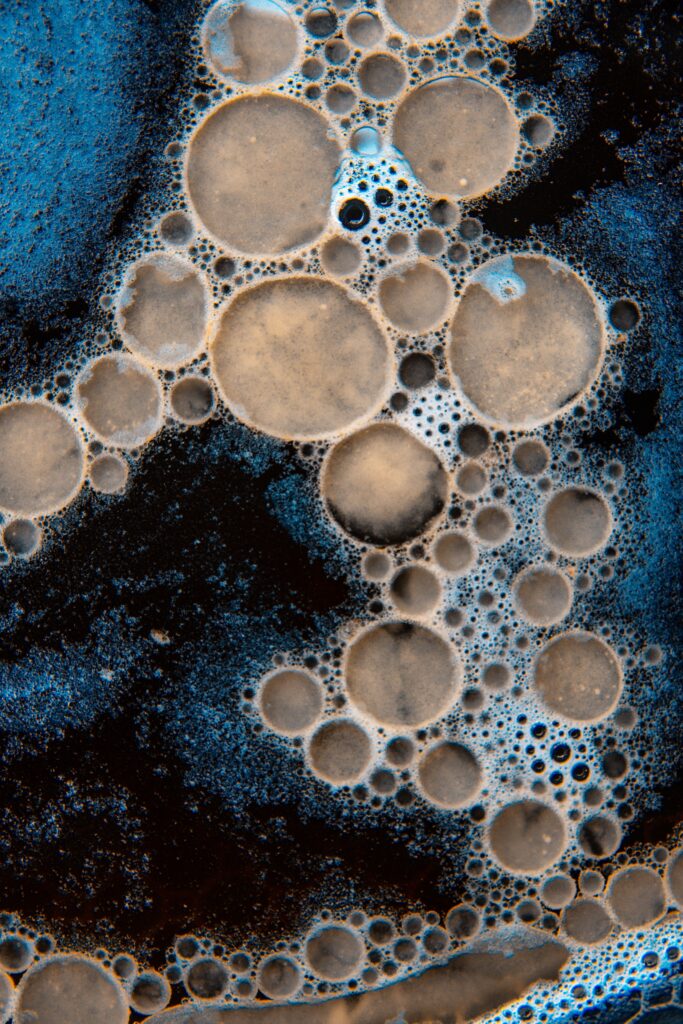
In simple terms, fermentation is a biological process in which microorganisms such as bacteria or yeast transform components of a starting material, or substrate, into other compounds.
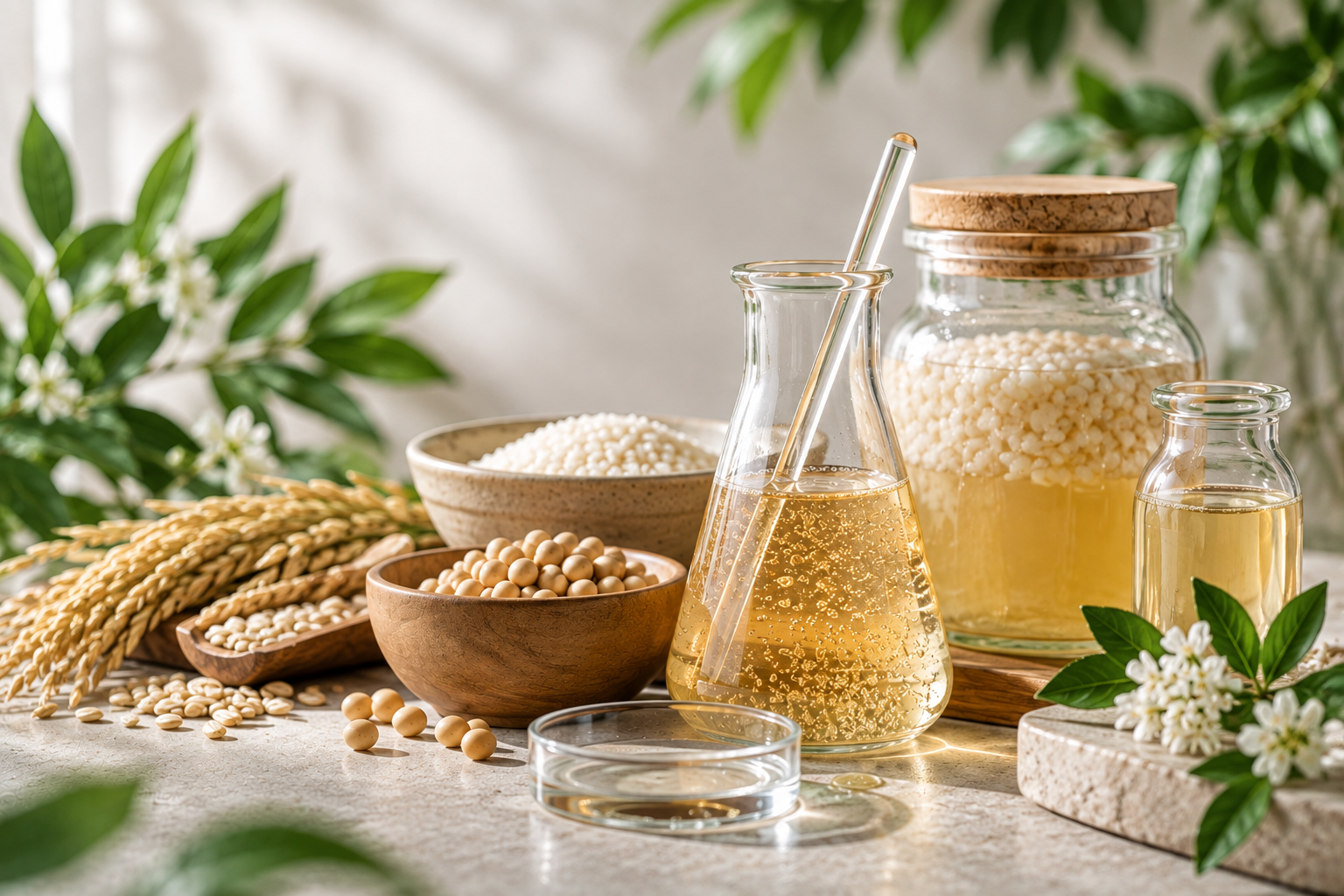
The same broad idea is familiar from foods such as yogurt, kimchi, soy sauce, and wine. In skincare, microorganisms can be used under controlled conditions to ferment materials such as soybeans, fruits, or grains.
The result is not necessarily the same as the original ingredient. Depending on the microorganism, the starting material, and the processing conditions, fermentation can change the composition of the resulting ingredient.
So how did fermentation make its way into skincare?
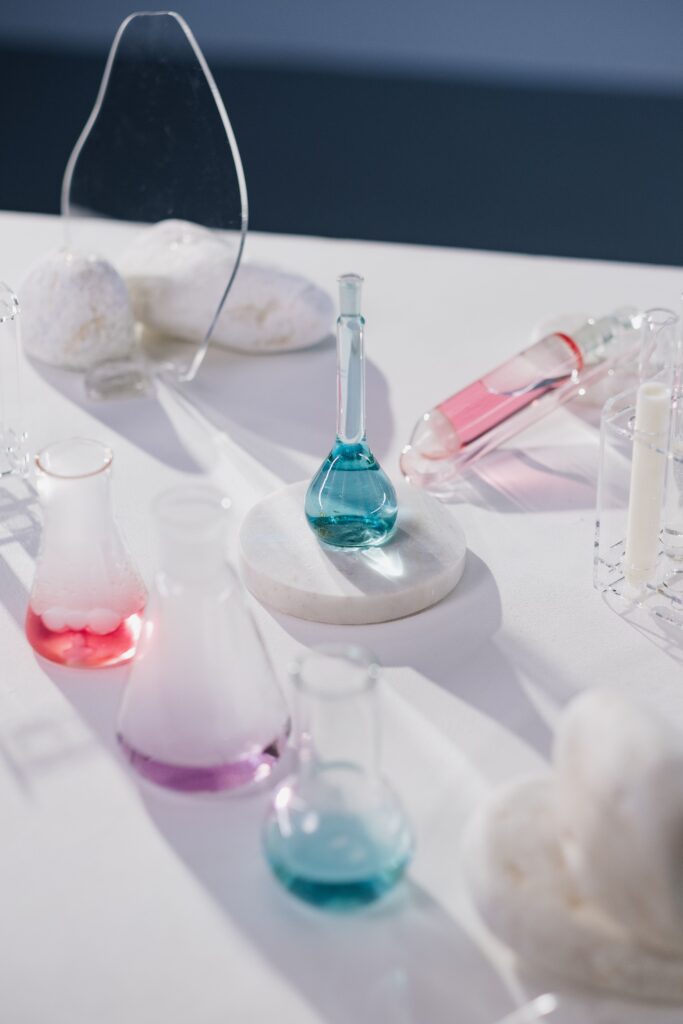
Cosmetic formulators can use fermentation as one way of processing botanical, grain, fruit, or other substrates. The resulting ingredient may contain a mixture of compounds produced or modified during fermentation.
That is what makes fermented skincare interesting — not because fermentation automatically makes an ingredient better, but because the process can produce an ingredient with a different chemical profile from the original material.
Okay, But Why Might Fermentation Matter for the Skin?
This is where things become more interesting — and also where it helps to avoid oversimplifying the science.
Fermentation can produce or alter a range of compounds, depending on the microorganisms and substrate involved. These may include organic acids, amino acids, peptides, and other metabolites.
Some of these compounds are relevant to skin biology. For example, components associated with the skin’s natural moisturizing environment include amino acids and other small molecules. Lactic acid is also naturally present in the skin and is associated with the skin’s natural moisturizing factor.
However, it would be too broad to say that fermentation always produces smaller molecules that are automatically absorbed more easily by the skin.
The actual composition of a fermented ingredient depends on what was fermented, which microorganism was used, how the fermentation was carried out, and how the resulting material was processed and formulated.
In other words, “fermented” describes a process — not a guaranteed skincare benefit.
What Does the Actual Research Say?
Research on fermented skincare ingredients is growing, but the evidence is still very ingredient-specific.
One example comes from a 2023 clinical study published in the Journal of Cosmetic Dermatology. Researchers evaluated a cosmetic sample called Cera-Glow containing ferment lysates from a specific strain, Lacticaseibacillus rhamnosus IDCC 3201.
The study included separate groups for measurements of transepidermal water loss (TEWL) and skin hydration. The researchers reported improvements in experimentally induced TEWL and increased skin hydration following use of the test product.
The study is notable because it involved human participants and measured objective skin parameters.
But there is an important distinction:
This was research on a specific ferment lysate and a specific cosmetic formulation. It does not mean that every ingredient labeled “Lactobacillus Ferment” will produce the same results.
(Lee, J. et al., Journal of Cosmetic Dermatology, 2023)
More recently, a 2026 study published in Frontiers in Physiology evaluated a cream containing 3% lactic acid ferment lysate in 42 people with oily skin over 60 days.
The researchers reported decreases in TEWL and increases in measured skin hydration during the study period. However, the researchers described the study as a single-arm, unblinded pilot study without a vehicle or active comparator group. They therefore noted that the findings should be considered preliminary and that controlled clinical trials would be needed for confirmation.
Taken together, these studies provide some interesting evidence that certain fermented ingredients may be associated with improvements in skin hydration or barrier-related measurements.
But the important word is certain.
The research on one specific ferment lysate should not automatically be applied to every fermented ingredient found on a skincare label.
Wait — “Ferment,” “Filtrate,” “Lysate”… Are They the Same Thing?
Not exactly.
These terms can refer to ingredients produced through different processing steps.
Ferment — generally refers to a material produced through fermentation. The exact composition and processing can vary depending on the ingredient.
Ferment Filtrate — generally refers to a fermented material that has undergone filtration to remove some or all of the microbial cells or other solids.
Ferment Lysate — generally refers to material derived from disrupted microbial cells, allowing intracellular components to become part of the resulting ingredient.
Because these terms describe different types of processed materials, they should not automatically be treated as interchangeable.
This distinction matters when reading an ingredient list.
For example, one formula might contain:
Lactobacillus/Soybean Ferment Extract
Lactobacillus/Punica Granatum Fruit Ferment Extract
Lactobacillus/Pear Juice Ferment Filtrate
Saccharomyces/Barley Seed Ferment Filtrate
Lactobacillus Ferment
These ingredients involve different starting materials and may also involve different processing methods.
None of these should automatically be assumed to be equivalent to the specific ferment lysate studied in the 2023 clinical research mentioned above.
So while the research on certain fermented ingredients is interesting, it does not establish that every fermented ingredient in every skincare formula will have the same effect.
Okay, So Is Fermentation Always a Good Thing?.
What happens during fermentation depends on the microorganism, the substrate, the fermentation conditions, and what happens to the ingredient afterward.
The final skincare formula also matters. A fermented ingredient is only one part of a product that may contain humectants, emollients, oils, ceramides, preservatives, fragrances, and many other ingredients.
A few points are worth keeping in mind:
“Fermented” does not automatically mean “gentle.” Skin tolerance depends on the finished ingredient and the overall formula.
Fermentation does not necessarily remove sensitivities to the original material. If you already know that you react to a particular ingredient, it is reasonable to check the complete ingredient list rather than assuming fermentation changes the risk completely.
Fermented ingredients can differ substantially from one another. The microorganism, substrate, processing method, and concentration can all matter.
The finished formula matters. The effect of one ingredient cannot necessarily be separated from the other ingredients surrounding it.
None of this means fermented skincare is ineffective. Rather, it suggests that the word fermented should be viewed as a starting point for understanding an ingredient, rather than as proof of a particular benefit.
So, How Should You Actually Think About Fermented Skincare?
Fermented ingredients are an interesting area of K-beauty research, particularly because some specific ferment lysates have been investigated in human studies.
At the same time, the evidence varies considerably from one fermented ingredient to another.
When you see Ferment, Ferment Filtrate, or Ferment Lysate on an ingredient list, it can be useful to ask:
What was fermented?
Which microorganism was involved?
How was the ingredient processed?
Has this particular ingredient or a comparable formulation been studied in humans?
And perhaps most importantly:
What does the complete formula look like?
Rather than assuming that “fermented” automatically means better, looking at these details can give you a more realistic picture of what the ingredient may contribute.
Summary
Fermentation is a biological process that can change the composition of a starting material through the activity of microorganisms.
Some fermented skincare ingredients have been investigated for properties related to hydration and skin barrier function. Clinical studies involving specific ferment lysates have reported changes in measurements such as TEWL and skin hydration, but these findings should not automatically be generalized to every fermented ingredient.
The terms ferment, ferment filtrate, and ferment lysate can also refer to different types of processed ingredients.
So when you see the word fermented on a K-beauty label, it may be worth looking beyond the trend itself and asking what was actually fermented, how it was processed, and what evidence exists for that specific ingredient.
A Few Questions You Might Have
Is Lactobacillus Ferment the same as a live probiotic?
Not necessarily. A cosmetic ingredient labeled Lactobacillus Ferment is not automatically a live probiotic culture. The ingredient has been processed for cosmetic use, and its composition depends on the specific manufacturing process.
Does “fermented” mean “natural” or “gentle”?
Not necessarily. Fermentation describes a process. It does not by itself establish that a finished cosmetic product will be gentle or suitable for every skin type.
Why does one product list several different “Ferment” ingredients?
They may come from different starting materials and fermentation processes. For example, a formula may contain fermented soybean, pomegranate, pear, or barley-derived ingredients. Each ingredient should be considered individually rather than assuming that all ferments work in the same way.
Can fermented ingredients help with fall dryness?
Some specific fermented ingredients have been studied in relation to hydration and TEWL, which are relevant to skin moisture and barrier function. However, the evidence is ingredient-specific, and results from one fermented ingredient cannot automatically be applied to all fermented skincare products.
Should I patch-test fermented products?
If you have sensitive or reactive skin, patch-testing a new skincare product may be a reasonable precaution. It is also helpful to review the complete ingredient list rather than focusing only on the word “fermented.”
Curious About a Formula With Real Fermented Ingredients?
If you’d like to see how fermented ingredients appear in a real skincare formula, take a look at Nourishing Elasticity Cream.
Fermented Ingredients in This Formula:
- Lactobacillus/Soybean Ferment Extract
- Lactobacillus/Pomegranate Fruit Ferment Extract
- Lactobacillus/Pear Juice Ferment Filtrate
- Saccharomyces/Barley Seed Ferment Filtrate
Fermentation is fascinating — but understanding the specific ingredient matters more than the trend itself.
References
Lee, J. et al. Journal of Cosmetic Dermatology, 2023.
Frontiers in Physiology, 2026. Lactic acid ferment lysate study.
Disclaimer
This article is intended for general informational and educational purposes only. It is not intended to diagnose, treat, cure, or prevent any skin condition, and should not be interpreted as medical or dermatological advice. Individual skin responses vary, and the presence of an ingredient does not guarantee a specific result for every user. If you have a skin concern, sensitivity, or condition, please consult a licensed dermatologist or healthcare professional before introducing new skincare products or ingredients into your routine.
Related Reading
Chamaecyparis Obtusa Water: What Is Hinoki Cypress Water in Skincare?